Collective Probability: Why the Gambling Label Misses the Point
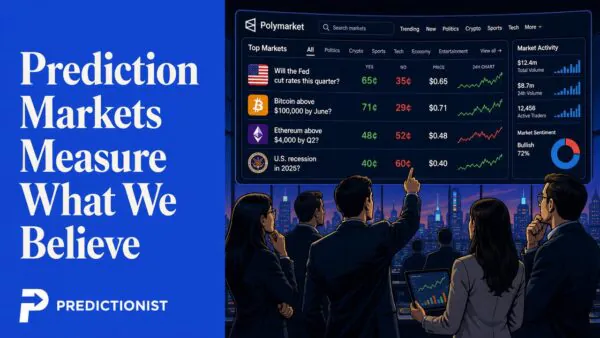
Prediction markets aren’t bets on luck, they’re forecasting tools hiding behind the wrong introduction
Explore why prediction markets get dismissed as gambling and how the real problem is framing, not mechanics. Learn what collective probability actually reveals when people put real information on the line.
TL;DR
- The gambling label is a framing problem – Prediction markets were introduced with betting language for quick adoption, which made smart people dismiss a genuinely powerful forecasting tool.
- Market prices are collective probability estimates – A contract at $0.65 means the incentivized crowd collectively estimates a 65% chance, not that someone is rolling dice. Accuracy rates hit 85-94% across diverse events.
- The edge goes to knowledge, not luck – Unlike gambling where the house always wins, prediction markets reward participants who bring better information or analysis, and the byproduct is a public signal everyone can use.
- Think thermometer, not dice – Prediction markets measure the temperature of collective expectations in real time. They don’t create outcomes; they aggregate what informed people believe will happen.
The Question Nobody Wants to Ask Out Loud
You’re scrolling through a prediction market for the first time. You see a contract priced at $0.65 on whether the Fed will cut rates this quarter. You think: “Wait, am I just placing a bet?” That question hits almost everyone who encounters market prices tied to real-world events. And honestly, the way most platforms introduce themselves, they’re practically begging you to think that.
Why “Bet on What Happens Next” Became the Default Pitch
The gambling comparison didn’t come from nowhere. Early prediction markets leaned into the language of betting because it was instantly familiar. That familiarity clearly worked, as Polymarket alone grew from roughly 4,000 active traders to over 314,000 in a single year. “Pick a side, put money down, win or lose.” That framing got people through the door fast. It worked for marketing.
And let’s be fair: on the surface, the mechanics look similar. You’re risking capital on an uncertain outcome. A sportsbook does that. A poker table does that. So when someone calls prediction markets gambling, they’re not being unreasonable. In fact, 61% of Americans in a 2026 Ipsos poll said prediction market contracts feel closer to gambling than investing. They’re responding to the frame they were given.
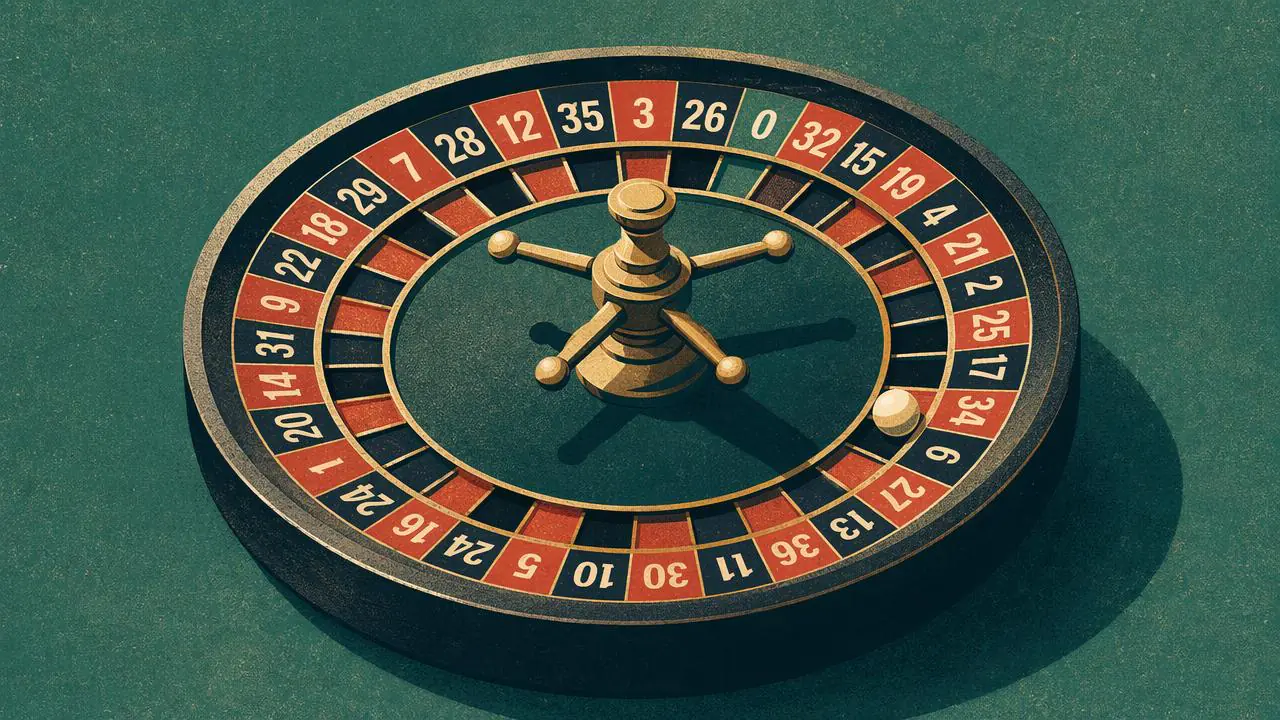
But that frame is doing real damage. It makes smart, curious people dismiss one of the most powerful forecasting tools available today, not because they evaluated it and found it lacking, but because the introduction was wrong. That framing problem is widespread: 61% of Americans classify prediction markets as gambling, not investing, according to a national Ipsos poll.
The Frame Is the Problem, Not the Market
Here’s what we actually believe: calling prediction markets gambling is like calling a thermometer a piece of glass. Technically, there’s glass involved. But you’re missing the entire point of the instrument.
A prediction market price isn’t a bet on luck. It’s a collective probability estimate, built by people who are putting real money behind their analysis of real information. The price is the signal. That’s the thing worth paying attention to.
How Market Prices Actually Carry Information
Let’s make this concrete. When a contract on a prediction market trades at $0.65, it doesn’t mean someone is “betting” at 65% odds the way you’d bet on a horse. It means that the aggregate of everyone buying and selling that contract, each with their own research, models, insider knowledge, or gut instinct backed by capital, has settled on 65% as the going rate for that event’s likelihood.
That number moves. When new information drops (a policy announcement, an earnings report, a geopolitical shift), the price adjusts in real time. In early 2025, the implied probability of a U.S. recession on one major platform surged from roughly 20% to 40% within a single month, reflecting a rapid shift in collective sentiment that polls and pundits were still debating weeks later.
This is not what gambling does.
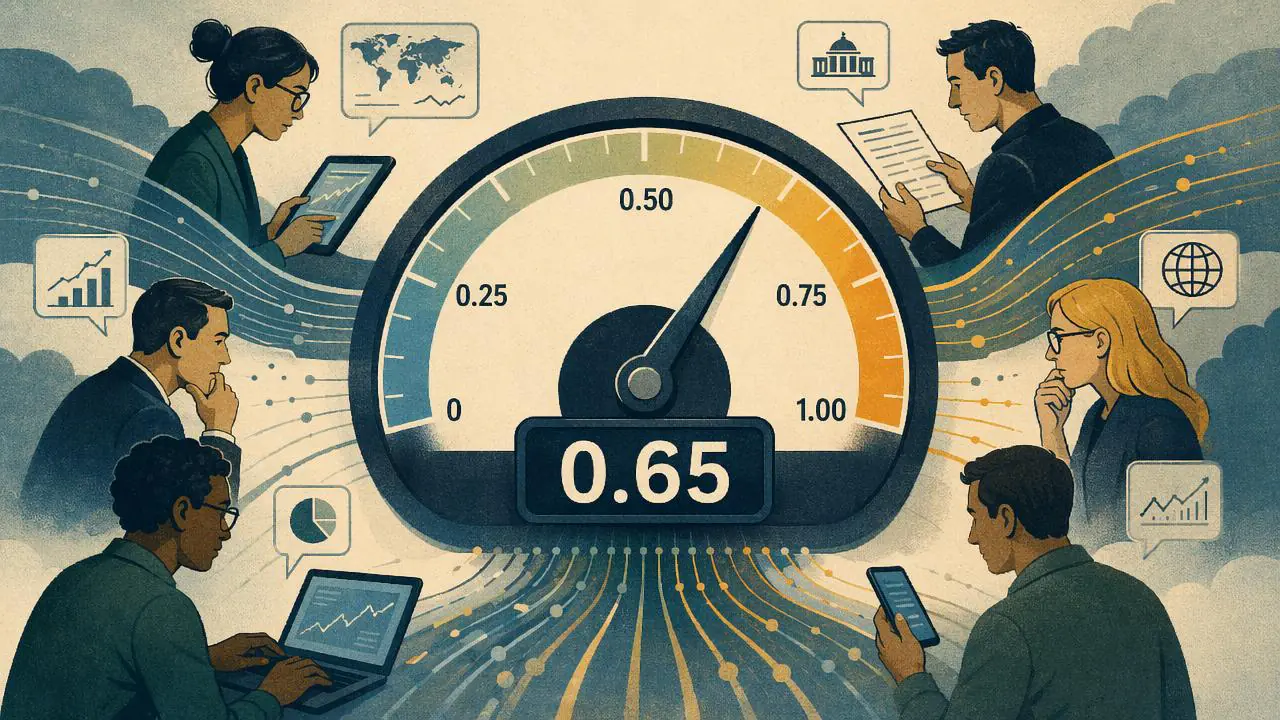
Gambling prices are set by a house. The odds reflect the bookmaker’s margin, not the crowd’s best estimate. The house doesn’t care what’s true; it cares about balancing its book. A prediction market has no house. Traditional sportsbooks carry a ~5% built-in margin against you, compared to roughly 0.75% on platforms like Polymarket, which is nearly 7x cheaper to trade. The price is emergent. It’s the product of distributed intelligence, not centralized profit-taking.
Philip Tetlock, the University of Pennsylvania researcher who has spent decades studying forecasting accuracy, describes prediction markets as “incentivized information aggregation” rather than gambling. People with genuine information are motivated to act on it because money is at stake. The financial incentive isn’t the point of the system; it’s the mechanism that makes the signal reliable.

And the signal is remarkably reliable. Accuracy rates across diverse events (elections, vaccine approvals, hurricanes, central bank decisions) consistently land between 85% and 94%, outperforming polls and expert forecasts. This isn’t a lucky streak. It’s a structural advantage that comes from aggregating information through skin-in-the-game incentives.
Consider the scale: prediction markets generated over $27.9 billion in trading volume between January and October 2025 alone. Economic markets on these platforms surged 905%, while tech and science markets skyrocketed 1,100%. This isn’t a niche gambling subculture. It’s an emerging information infrastructure. Boaz Sobrado, who co-authored a major 2025 report on the sector, calls them “event-driven data infrastructures” where staked capital produces a more accurate, real-time signal than static polls or analyst forecasts.
If this were just gambling, institutional interest wouldn’t be accelerating. At least nine major brokerages launched prediction products between late 2024 and early 2026. That momentum is hard to ignore, as industry trading volume surged from roughly $9 billion in 2024 to $40 billion in 2025, signaling real demand, not just experimentation. You don’t build financial products on top of a casino.
What You’re Actually Deciding When You Dismiss the Signal
If this reframe is right, the implications matter. When you see a market price at $0.72 on a geopolitical event and dismiss it as “just gambling,” you’re ignoring a probability estimate that has, on average, outperformed the experts you’d otherwise rely on. You’re choosing a less accurate information source because the more accurate one was poorly introduced. That gap is very real: research on U.S. election forecasting found prediction markets had an average error of 2.41 points versus 4.46 points for polls.
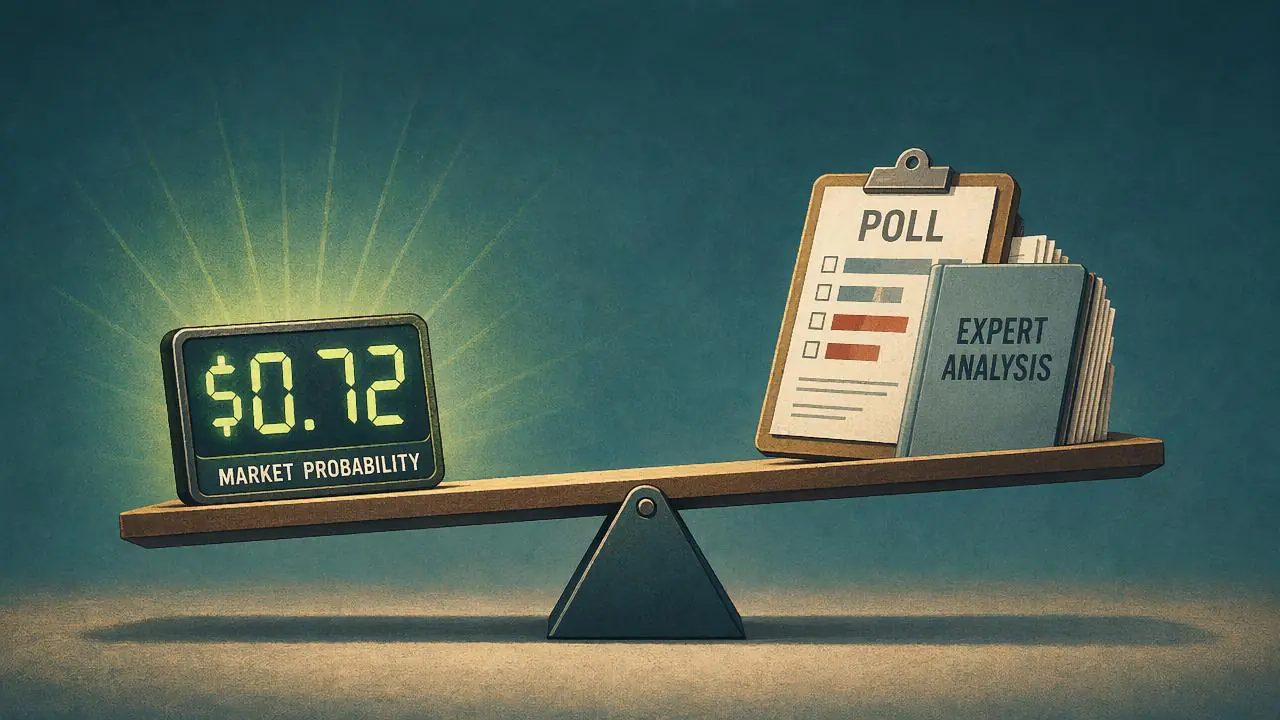
The cost isn’t abstract. People make real decisions based on their expectations about the future: investment allocations, business strategy, career moves. A tool that aggregates distributed knowledge into a real-time probability signal is genuinely useful for those decisions. Dismissing it because it superficially resembles a sportsbook is like refusing to use GPS because it looks like a video game. The stakes are real: Gartner research estimates that poor-quality data and bad forecasting decisions cost the average company $15 million every year.
This is exactly the kind of gap that Predictionist exists to close. Their educational-first approach, particularly the Predictionist School video series, walks newcomers through how to actually read and interpret market signals without the jargon or platform bias that typically clouds the introduction.
A Better Way to See It: Thermometers, Not Dice
Here’s the mental model we’d offer: prediction markets are thermometers for expectations. They don’t create the temperature. They measure it. The price of a contract is a reading of what the collective, incentivized crowd believes is likely to happen.
Gambling asks: “Do you feel lucky?” Prediction markets ask: “What do you know that the price doesn’t reflect yet?”

That distinction changes everything. In gambling, the edge belongs to the house. In prediction markets, the edge belongs to anyone with better information or analysis. The system rewards knowledge, not luck. In fact, research on prediction markets shows the top 1% of profitable traders capture 76.5% of all gains, a clear sign that knowledge compounds into real edge. And the byproduct of that reward system is a public signal that everyone, participants and observers alike, can use to make better decisions.
The Industry Owes You a Better Introduction
The confusion between prediction markets and gambling isn’t a failure of your understanding. It’s a failure of framing by an industry that prioritized quick adoption over accurate explanation. The next time someone asks “Isn’t this just gambling?” the answer isn’t defensive. It’s simple: the price is the point. And the price knows more than you think.
Frequently Asked Questions
In traditional betting, odds are set by a bookmaker to guarantee a profit margin regardless of the outcome. In prediction markets, prices emerge from peer-to-peer trading where participants stake capital on their own analysis, making the price a collective probability estimate rather than a house-controlled number.
Because participants have real money on the line, they’re incentivized to act on genuine information rather than express casual opinions. This skin-in-the-game mechanism consistently produces accuracy rates between 85% and 94% across diverse event types, outperforming traditional polling methods.
A contract trading at $0.65 implies the market collectively estimates a 65% probability that the event will occur. As new information emerges, the price adjusts in real time, giving you a continuously updated forecast built by the crowd’s aggregated knowledge.
Sources
- https://gitnux.org/prediction-market-statistics/
- https://www.theblock.co/post/333050/polymarkets-huge-year-9-billion-in-volume-and-314000-active-traders-redefine-prediction-markets
- https://aibm.org/research/most-americans-see-prediction-markets-as-more-like-gambling-than-investing-new-aibm-ipsos-poll-finds/
- https://www.mexc.com/news/991424
- https://www.sportsinsights.com/betting-tools/sportsbook-profit-margins/
- https://docs.polymarket.com/trading/fees
- https://www.economist.com/the-world-ahead/2024/11/18/prediction-markets-are-the-new-oracle-economy
- https://predictionist.com/prediction-markets-weekly-digest-may-11-to-17-2/
- https://www.forbes.com/sites/boazsobrado/2025/12/16/how-prediction-markets-actually-grew-in-2025/
- https://kpmg.com/us/en/articles/2025/current-state-of-prediction-markets.html
- https://academic.oup.com/poq/article/72/2/190/1920364
- https://www.anaplan.com/blog/high-cost-of-inaccurate-forecasting/
- https://www.predictionist.com
- https://ipredicta.co/learn/who-wins-and-who-loses-on-prediction-markets/